



GABA Receptor
Gamma-aminobutyric acid Receptor; γ-Aminobutyric acid Receptor
GABA receptors are a class of receptors that respond to the neurotransmitter gamma-aminobutyric acid (GABA), the chief inhibitory neurotransmitter in the vertebrate central nervous system. There are two classes of GABA receptors: GABAA and GABAB. GABAA receptors are ligand-gated ion channels (also known as ionotropic receptors), whereas GABAB receptors are G protein-coupled receptors (also known asmetabotropic receptors). It has long been recognized that the fast response of neurons to GABA that is blocked by bicuculline and picrotoxin is due to direct activation of an anion channel. This channel was subsequently termed the GABAA receptor. Fast-responding GABA receptors are members of family of Cys-loop ligand-gated ion channels. A slow response to GABA is mediated by GABAB receptors, originally defined on the basis of pharmacological properties.
All Product Categories
-
GABA Receptor Inhibitors
(151)
View all products
-
GABA Receptor Agonists
(188)
View all products
-
GABA Receptor Antagonists
(137)
View all products
-
GABA Receptor Activators
(72)
View all products
-
GABA Receptor Modulators
(92)
View all products
-
GABA Receptor Controls
(4)
View all products
-
GABA Receptor Ligands
(16)
View all products
-
GABA Receptor Related Products (778)
Related Products (778)

-
Antibodies (14)
-
Related Compound Screening Libraries (1)
-
ZAPA sulfate
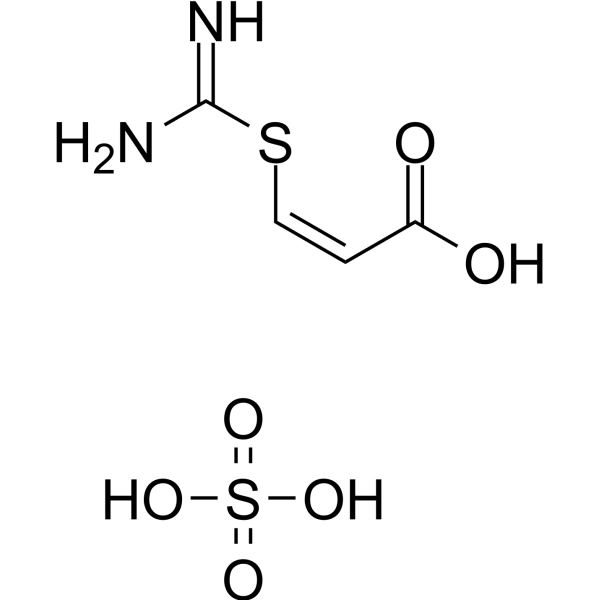 0 ImagesZAPA sulfate is an agonist at low affinity GABAA-receptors. ZAPA sulfate induces membrane hyperpolarization of the Ascaris muscle cell with an EC50 of 10.3 μM.
-
GET73
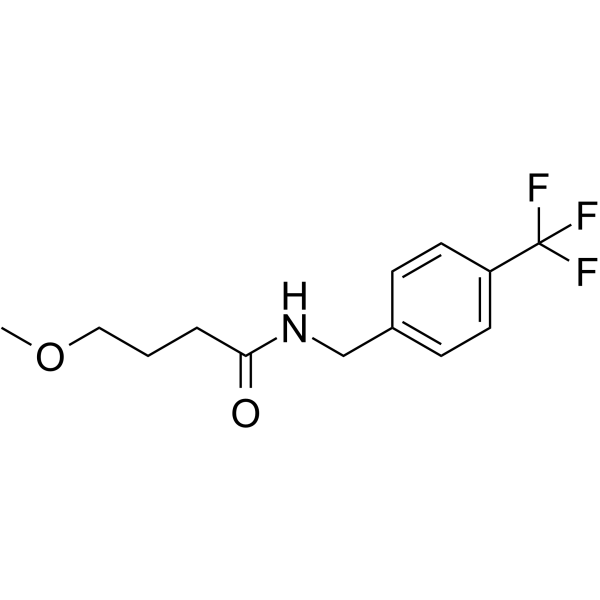 0 ImagesGET73 is a γ-hydroxybutyric acid (GHB) analog, a naturally occurring neurotransmitter. GET73 has anti-alcohol and anxiolytic properties. GET73 significantly affects glutamate transmission in the hippocampus.
-
Adinazolam
 0 ImagesSynonyms: U 41123Adinazolam (U 41123) is a triazolobenzodiazepine. Adinazolam binds to peripheral-type benzodiazepine receptors which interact allosterically with GABA receptors. Adinazolam has dual anxiolytic and antidepressant activities.
-
Lesogaberan
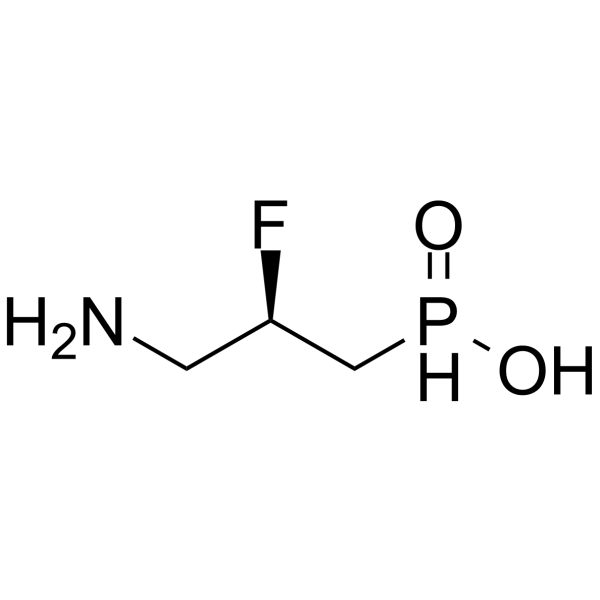 0 ImagesCat. No.: HY-10061CAS No.: 344413-67-8Synonyms: AZD-3355Lesogaberan (AZD-3355) is a potent and selective GABAB receptor agonist with an EC50 of 8.6 nM for human recombinant GABAB receptors. The affinity (Kis) of Lesogaberan for rat GABAB and GABAA receptors, as measured by displacement of [3H]GABA binding in brain membranes: 5.1 nM and 1.4 μM, respectively. Lesogaberan inhibits transient lower esophageal sphincter relaxation through a peripheral mode of action.
-
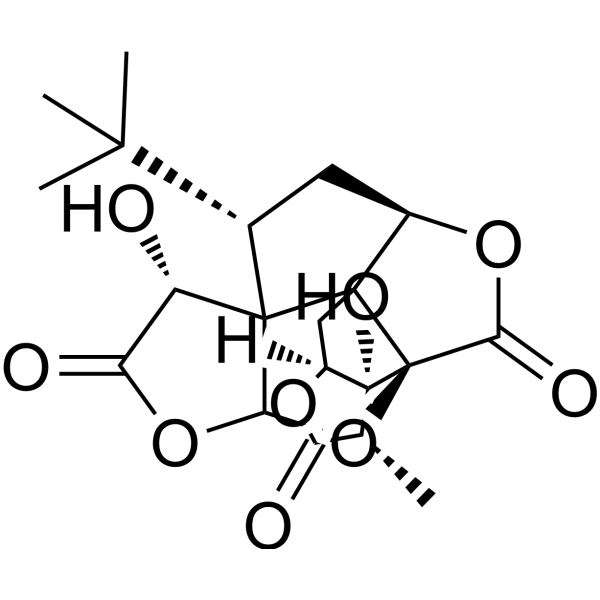
Zopiclone N-oxide
 0 ImagesSynonyms: RP 29753Zopiclone N-oxide (RP 29753) is a less active metabolite of Zopiclone. Zopiclone N-oxide is also an impurity of Eszopiclone and is formed by the oxidation of Eszopiclone.
-
KGP-25
 0 ImagesCat. No.: HY-163855KGP-25 is an inhibitor of voltage-gated sodium channel 1.8 (Nav1.8), which can be used for analgesia by targeting Nav1.8 in the peripheral nervous system (PNS). KGP-25 can also target γ-aminobutyric acid subtype A receptor (GABAA) in the central nervous system (CNS) for general anesthesia.
-
Imepitoin
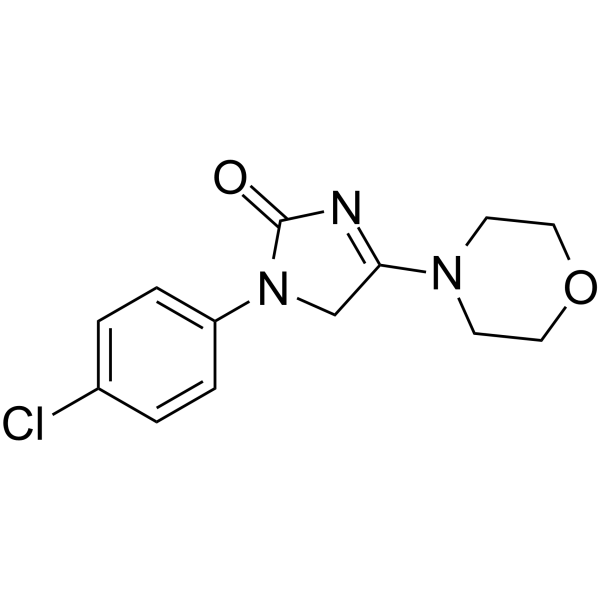 0 ImagesSynonyms: AWD 131-138Imepitoin (AWD 131-138) is a new low-affinity partial benzodiazepine receptor agonist with potent anticonvulsant and anxiolytic properties in rodent models.
-
OV329 hydrochloride
 0 ImagesOV329 hydrochloride is a potent GABA aminotransferase inactivator. OV329 hydrochloride is a Vigabatrin (HY-15399) analogue. OV329 hydrochloride can increase brain GABA levels and block abnormal intracerebral hyperexcitability. OV329 hydrochloride exhibits anticonvulsant and antiepileptic activities. OV329 hydrochloride can be used for the research of neurological disease, such as seizure.
-
4-Hydroxy midazolam methanoate-d5
 0 ImagesCat. No.: HY-W740139CAS No.: 1276584-44-14-Hydroxy midazolam methanoate-d5 is the deuterium labeled 4-Hydroxymidazolam (HY-100050). 4-Hydroxymidazolam is a major metabolite of Midazolam. Midazolam is a potent benzodiazepine with anxiolytic properties.
-
Anticonvulsant agent 2
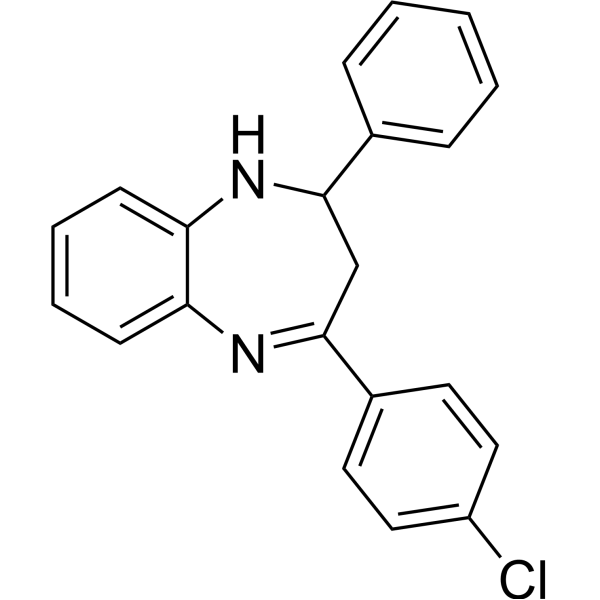 0 ImagesCat. No.: HY-154436CAS No.: 75220-84-7Anticonvulsant agent 2 is a potent and orally active anticonvulsant agent. Anticonvulsant agent 2 shows antiepileptic activity.
-
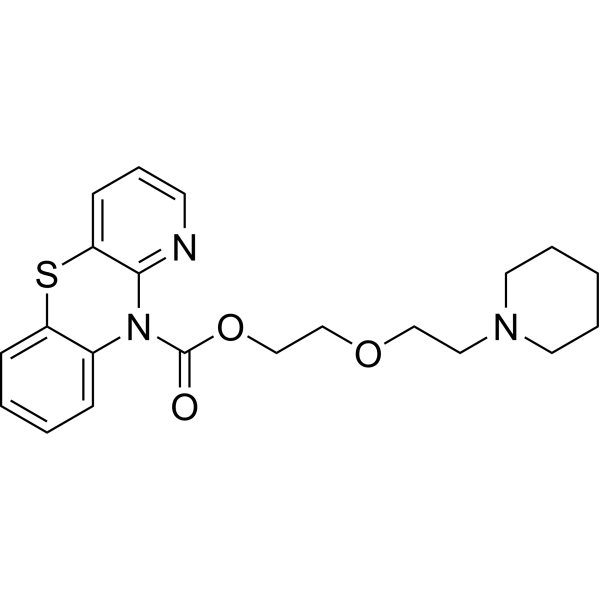
(S)-Padsevonil
 0 ImagesSynonyms: (S)-UCB-0942(S)-Padsevonil is the S-enantiomer of Padsevonil (HY-109009).Padsevonil (UCB0942) is a potent antiepileptic agent that selectively acts on presynaptic and postsynaptic targets. Padsevonil binds to synaptic vesicular protein 2 (SV2) with high affinity. Padsevonil is also a positive allosteric modulator and partial agonist of GABAAR, with high potency against α1 and α5 receptors. Padsevonil has antiepileptic effects in a variety of rodent models.
-
(1S,3R)-3-Aminocyclopentane carboxylic acid
 0 ImagesCat. No.: HY-124534CAS No.: 71830-07-4(1S,3R)-3-Aminocyclopentane carboxylic acid has GABAA receptor activity.
-
MRK-623
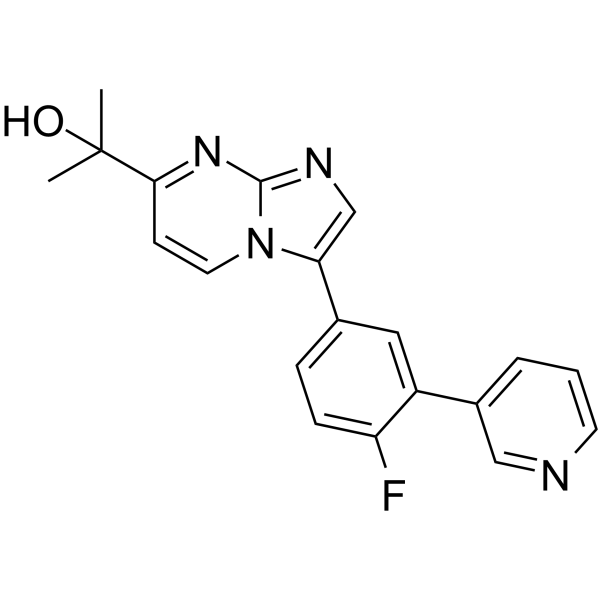 0 ImagesMRK-623 (Compound 14k) is an orally active, high-affinity GABAA receptor agonist, with the Ki values of 0.85 nM, 3.7 nM, 4.0 nM, and 0.53 nM for α1, α2, α3, and α5, respectively. MRK-623 shows anxiolytic effect.
-
Afoxolaner (Standard)
 0 ImagesAfoxolaner (Standard) is the analytical standard of Afoxolaner. This product is intended for research and analytical applications. Afoxolaner is an orally active isoxazoline insecticide/acaricide against Ixodes scapularis in dogs. Afoxolaner acts on the insect γ-aminobutyric acid receptor (GABA) and glutamate receptors, inhibiting GABA & glutamate-regulated uptake of chloride ions, resulting in excess neuronal stimulation and death of the arthropod.
-
p-Hydroxybenzaldehyde (Standard)
 0 Imagesp-Hydroxybenzaldehyde (Standard) is the analytical standard of p-Hydroxybenzaldehyde. This product is intended for research and analytical applications. p-Hydroxybenzaldehyde is a one of the major components in vanilla aroma, with antagonistic effect on GABAA receptor of the α1β2γ2S subtype at high concentrations.
-
Cefepime (Standard)
 0 ImagesSynonyms: BMY-28142 (Standard)Cefepime (BMY-28142) (Standard) is the analytical standard of Cefepime. This product is intended for research and analytical applications. Cefepime is a broad-spectrum, blood-brain barrier-permeable cephalosporin antibiotic with hPON1 inhibitory activity, with an IC50 of 21.115 mM and a Ki of 35.092 mM. Cefepime inhibits hPON1 via a non-competitive mechanism and blocks GABAA receptors. Cefepime penetrates the outer membrane of Gram-negative bacteria, inhibits the growth of Gram-positive and Gram-negative bacteria, and does not induce the production of β-lactamase.
-
alpha-Asarone (Standard)
 0 ImagesSynonyms: α-Asarone (Standard); trans-Asarone (Standard)alpha-Asarone (Standard) is the analytical standard of alpha-Asarone. This product is intended for research and analytical applications. alpha-Asarone (α-Asarone) is one of the main psychoactive compounds, and possesses an antidepressant-like activity in mice.




